Auction Guide: 1992-1997 Ford F-250 (OBS HD)
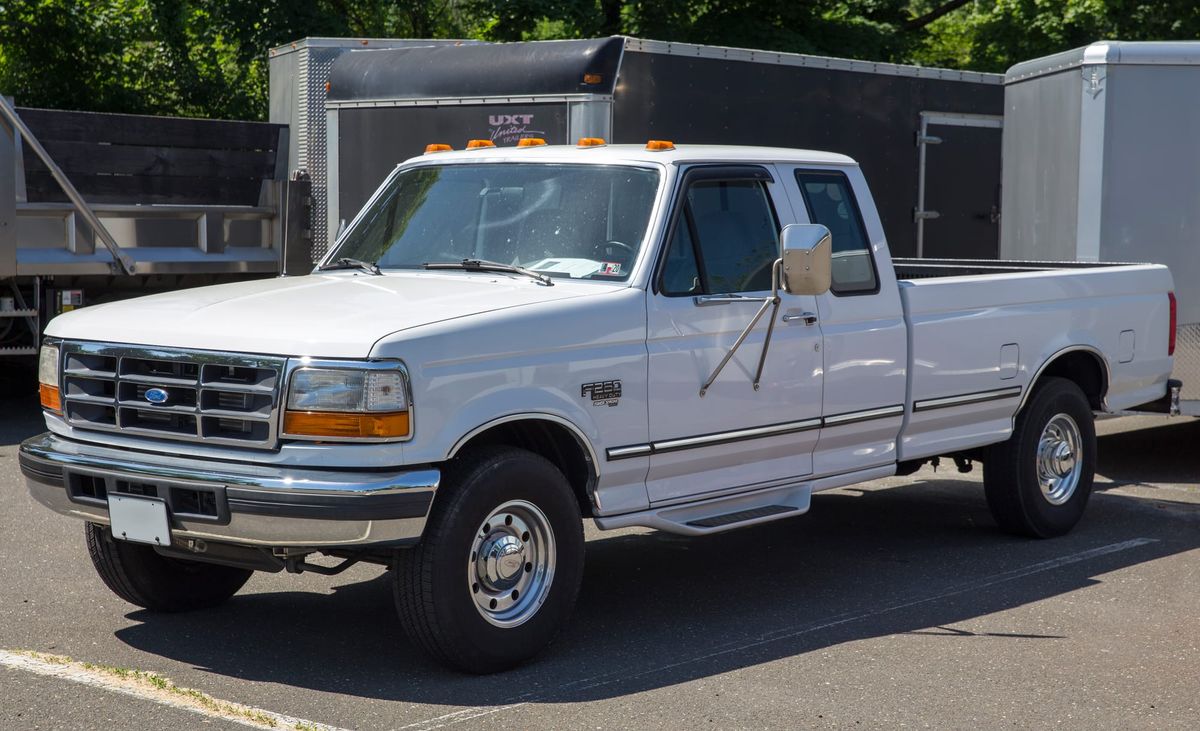
A guide to the production numbers, option codes, chassis stampings, problem targets, and historical values of the 1992-1997 Ford F-250.
The 1992–1997 Ford F-Series heavy-duty generation—widely heralded by enthusiasts as the 'OBS' (Old Body Style)—helped pioneer the modern era of high-torque utility iron, earning a reputation among owners for million mile durability. This iconic ninth-generation run masterfully blended the rugged, industrial workhorse mentality of Ford’s heavy commercial platforms with clean, aerodynamic exterior lines, luxurious XLT interior seating, and the legendary debut of the direct-injected 7.3L Powerstroke Turbo Diesel. Today, un-modified regular cabs and final-run short-bed configurations command market premiums, standing by many community metrics as a leading standard of 1990s modern-classic utility steel.
• The Vehicle: 1995–1997 Ford F-250 HD Regular Cab Long Bed 4x4 (XLT Trim).
• The Value Play: While four-door Crew Cabs and late short beds often command a premium in the marketplace, the classic Regular Cab Long Bed configuration offers identical heavy-duty frame strength, higher overall payload capacities, and significantly deeper donor parts availability at a lower entry cost.
• The Target Spec: Target a late 1995 to 1997 truck carrying the high-torque 7.5L 460ci Big Block V8 gas engine paired with the electronic E4OD 4-speed automatic, finished in premium XLT trim featuring factory power lumbar buckets and a clean gray or dark red interior layout.
• The Investment Outlook: For buyers who want classic heavy-duty OBS utility without paying the premium markup associated with a diesel Powerstroke powertrain, these big-block gas configurations represent a compelling alternative. They deliver massive torque, straightforward pushrod mechanical reliability, and strong potential for steady value retention as clean 1990s sheet metal becomes harder to source in the market.
Total Production Run: ~2,800,000+ units across Ford's 6-year ninth-generation F-Series build cycle.
The Rarest Year/Spec: 1997 Only. This marked the final run year of the heavy-duty OBS body style before Ford transitioned to the next-generation Super Duty frame style. For many enthusiasts, the highly sought-after configuration is a late-1997 F-250 Crew Cab Short Bed 4x4 optioned with the popular 7.3L Powerstroke Turbo Diesel and a factory ZF 5-speed manual transmission.
The Volume Years: 1993–1995. Production peaked at over 500,000 total F-Series platform builds annually during this stretch; these mid-run years generally offer the deepest, most affordable pool of chassis donor parts across the country.
The Wheelbases: Short Bed (139" WB / 6.75-foot box) vs. Long Bed (155" WB / 8-foot box). Unlike half-ton trucks, the heavy-duty short-bed configurations were introduced late in the generation (1996) and frequently command a significant market premium over standard utility long beds.
The Cab Styles: 2-Door Regular Cab, Extended SuperCab, and the highly desirable 4-Door Crew Cab.
The Powertrains: 4.9L Inline-6, 5.8L Windsor V8, the high-torque 7.5L 460ci Big Block V8, and the engine room staple: the 7.3L Powerstroke Direct-Injection Turbo Diesel V8 (introduced mid-1994).
The Drivetrains: 2WD vs. 4WD. Automatic options split between the early electronic E4OD and late-run 4R100 transmissions. Manual fans strongly prefer the highly durable, cast-aluminum ZF 5-speed heavy-duty gearbox (
S5-42 or late-run S5-47 configurations), which typically commands a notable price premium in enthusiast circles. Front axles utilize a Dana 50 Twin Traction Beam (TTB) setup on F-250 4x4 models.• Primary Dashboard Plate: Permanently riveted to the driver-side A-pillar dashboard corner, visible through the outside base of the front windshield glass.
• The Safety Certification Label: Located on the inner driver-side door jamb B-pillar structure. This label contains your factory paint and axle codes. Commonly sought-after axle codes include
H9 (3.55 gear ratio with rear limited-slip differential) or F7 (4.10 gear ratio with limited-slip) to verify if the truck left the assembly plant equipped with heavy-duty towing specs.• The Hidden Frame Stamp: Typically stamped onto the top surface of the passenger-side frame rail inside the engine compartment bay, running roughly parallel with the engine accessory pulleys. It may require clearing away road grime or factory coatings to read clearly.
• Digit 4 (Chassis Weight Brake): Look for
H or J, which generally indicate the 8,501–10,000 lbs GVWR class (Standard Heavy-Duty F-250 baseline).• Digit 8 (Engine Codes):
H = 5.8L Windsor V8 Gas; G = 7.5L V8 Big Block Gas; F = 7.3L Powerstroke Turbo Diesel.If these areas are not photographed or unclear ask the seller for an update.
The Dual Fuel Tank Selector Valve Freeze: The factory motorized selector valve fails or sticks internally, causing the engine to draw fuel from one tank but return unused fuel to the other, leading to fuel tank overflows or sudden engine starvation.
➔ How to Audit the Gallery: Look at the interior dashboard photos. Locate the small fuel tank toggle switch directly to the right of the steering column. If the gallery lacks a clear video showing the truck starting, idling, and running cleanly on both the "Front" and "Rear" switch selections, ask the seller for an update confirming both fuel pumps are functional.
The Twin Traction Beam (TTB) Pivot Bushing Rot: On 4x4 models, the heavy leaf-sprung factory front axle pivot bushings dry-rot and wallow out, causing severe front-end tire wear and violent steering wheel oscillation.
➔ How to Audit the Gallery: Locate the profile shots taken directly from the front bumper looking flat beneath the engine bay. Look closely at the large central pivot brackets holding the two overlapping front axle halves. If you see cracked, missing black rubber bushings or the inner metal sleeve is riding metal-on-metal against the bracket, the front suspension tracking is compromised.
The Cab Mount & Leaf Spring Shackle Scale: Road salt traps behind the front cab mounts and rear spring shackles, completely rotting away the structural mounting frames.
➔ How to Audit the Gallery: Scroll to the Undercarriage section of the gallery. Ignore the clean black frame rail lines and look directly behind the front tires at the base corners of the cab body, and look at the U-shaped metal hangers holding the rear leaf springs. If the metal edges are jagged or flakey like pie crust, the structural mounting mounts require full replacement.
Total Auction Volume: 118 Examples tracked across major in-person collector house circuits and digital valuation dockets over the past calendar year.
The Project/Driver Tier ($8,500 – $15,500): Standard long beds, high-mileage gas models, deteriorating dual fuel tank selector pumps, faded or peeling factory clear coats, split interior bench seat cloth trim, and mechanical mileage verified over 160k.
The Survivor/Collector Tier ($28,000 – $52,000): Late-run 1996–1997 Crew Cab Short Bed 4x4 packages, un-modified factory 7.3L Powerstrokes with pristine original engine paint, pristine XLT interior packages with intact dashboard trim, un-cut original two-tone paint configurations, and documented service history showing under 75k original miles.
Condition 4 (Fair): $9,100 ➔ Daily job site worker condition; minor parking lot sheet metal dings, clear coat fading on horizontal panels, non-functional rear fuel tank lines, or visible scaling along the rear leaf-spring brackets.
Condition 3 (Good): $18,900 ➔ Exceptionally straight truck showing light regular collector use; entirely correct factory exterior trim packages but exhibits minor stone chips on the nose cone and standard driver-side door weatherstripping wear.
Condition 2 (Excellent): $34,500 ➔ Show-ready collector truck; original or professional glass-out bare-metal respray paint depth, immaculate interior upholstery, crisp factory dashboard face vents, and zero structural undercarriage rust scale.
Condition 1 (Concours): $58,000 ➔ The absolute pinnacle of the asset market; flawless factory-original time-capsule survivor with complete showroom delivery paperwork, window stickers, or a meticulous frame-off nut-and-bolt rotisserie preservation build.
The Core Exterior Volume Colors: Oxford White (Code YO/YZ), Raven Black (Code YC), Vermilion Red (Code E4), Cayman Blue Metallic (Code PC), and Calypso Green Metallic (Code LI).
The Rarest Special Order Formats: Bimini Blue Metallic (Code K3) and Reef Blue Metallic (Code PD) — exclusive low-volume formulations that carry high value premiums on short-bed configurations today.
The Two-Tone Layouts: Regular Two-Tone (Contrast accent applied strictly to the roof panel line) vs. Deluxe Two-Tone (Contrast accent paint wrapped entirely between the upper and lower aluminum body-side protection moldings).
The Three Definitive Interior Era Splits
1992–1993 (The Early Flat-Dash Era): Distinguished by a hard, square-edged plastic dashboard face, standard sliding climate control cables, mechanical analog odometers, and traditional square-button factory radios. Cab trim colors were heavily saturated in Crystal Blue, Ruby Red, and Medium Mocha.
1994–1995 (The Mid-Run Airbag Shift): This split introduced the very first factory driver-side airbag steering wheel, updating the dash to a smooth, rounded safety edge. The odometer display transitioned to a bright digital vacuum-fluorescent screen (PSOM display), and the interior colors shifted to Opal Grey and Ruby Red.
1996–1997 (The Late Final Run Comfort): The absolute peak of utility comfort. This split brought premium cloth upholstery upgrades featuring integrated power lumbar supports, premium multi-tone door panel fabrics, and the highly desirable addition of rear passenger shoulder safety belt anchor loops. The dominant colors were clean Opal Grey and Deep Willow Green.
About Our Research & Disclaimer:
This auction guide was compiled by the OTA Staff using AI data-aggregation tools to analyze hundreds of owner forums, enthusiast groups, and video transcripts. Because we synthesize community-reported experiences, common mechanical issues listed (such as specific rust points or electrical quirks) reflect widespread owner trends rather than universally certified defects.
Old Truck Auctions does not provide financial, investment, or certified mechanical advice. All content is for educational and informational purposes only. The collectible asset market is highly volatile; past market performance or community sentiment regarding asset valuation does not guarantee future financial returns. Any mention of market stability or value represents aggregate community opinions, not financial projections. We always recommend having a qualified mechanic perform a physical pre-purchase inspection and consulting a certified financial professional before making high-value purchases.