Auction Guide: 1973-1987 Chevrolet C10/K10 (Square Body)
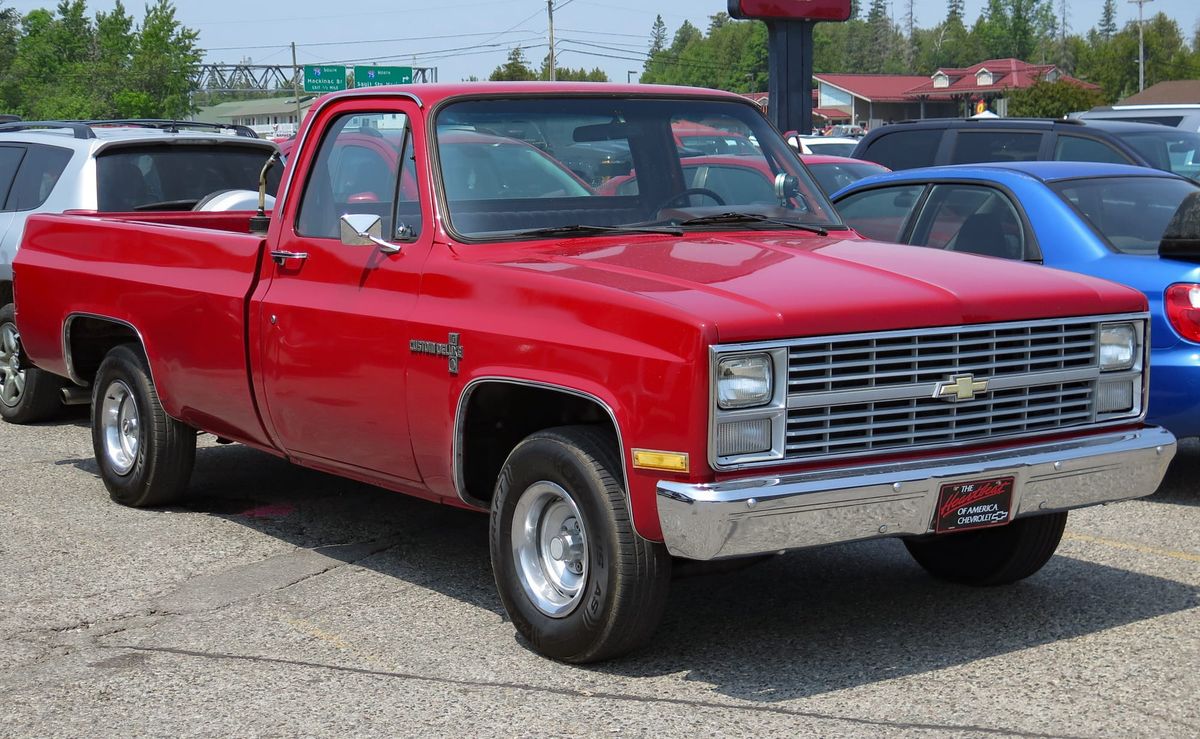
A guide to the production numbers, option codes, chassis stampings, problem targets, and historical values of the 1973–1987 GM C/K series.
The 1973–1987 GM C/K series—affectionately dubbed the 'Square Body'—is among the longest-running and most structurally significant generations in classic American truck history. This era fundamentally transformed utilitarian work trucks into comfortable, daily-driven lifestyle vehicles by introducing advanced aerodynamics, full-immersion rust electro-plating, and luxury interior trim packages. Today, well-maintained short-beds and original big-block models carry a significant premium, making them some of the most valuable classic trucks on the market.
🏆
The Holy Grail: The 1976 Chevrolet K10 'Feather-Bonnet' Indy 500 Support Truck Package (Code Z77). To capitalize on the 1976 Indy 500, GM built fewer than 500 total stepside 4x4 units finished in Code 11 White with factory red/blue laser stripes, a mandatory Code 292 Inline-6 engine, and a black bucket-seat interior. Finding a genuine, numbers-matching Z77 frame with an un-cut factory SPID label represents the absolute peak of 1970s Squarebody collectibility.
🥈
THE NEXT BEST (THE SMART BUYER'S TARGET)
• The Vehicle: 1985-1987 Chevrolet/GMC C10 Regular Cab Short Bed (Fleetside).
• The Value Play: These final model years represent the absolute peak of original Square Body engineering, introducing factory electronic fuel injection (TBI) in 1987 alongside highly improved rust-mitigation zinc coatings on core body panels.
• The Target Spec: Hunt for an un-modified original-paint two-tone truck carrying the premium "Silverado" or "Sierra Classic" interior trim packages, natively optioned with a 5.0L (LB4) or 5.7L V8 paired with the 700R4 f-speed overdrive automatic.
• The Investment Outlook: While the ultra-rare 4x4 short beds command massive market premiums, these late-run two-wheel-drive Fleetside short beds are the absolute sweet spot of the current market—offering classic vintage styling, improved modern reliability, cheap replacement parts availability, and virtually guaranteed equity growth.
• The Vehicle: 1985-1987 Chevrolet/GMC C10 Regular Cab Short Bed (Fleetside).
• The Value Play: These final model years represent the absolute peak of original Square Body engineering, introducing factory electronic fuel injection (TBI) in 1987 alongside highly improved rust-mitigation zinc coatings on core body panels.
• The Target Spec: Hunt for an un-modified original-paint two-tone truck carrying the premium "Silverado" or "Sierra Classic" interior trim packages, natively optioned with a 5.0L (LB4) or 5.7L V8 paired with the 700R4 f-speed overdrive automatic.
• The Investment Outlook: While the ultra-rare 4x4 short beds command massive market premiums, these late-run two-wheel-drive Fleetside short beds are the absolute sweet spot of the current market—offering classic vintage styling, improved modern reliability, cheap replacement parts availability, and virtually guaranteed equity growth.
💡
PRODUCTION VOLUME & SPECIFICATIONS
• Total Production Run: ~10,000,000+ units across GM's 15-year tooling run
• The Rarest Year/Spec: 1987 Only. This was the final year of the conventional pickup shape, introducing single-year factory Electronic Fuel Injection (EFI) via the TBI throttle body setup. The 1973–1974 "Round Eye" versions with the recessed grilles are the most sought-after carbureted collectors.
• The Volume Years: 1976–1984. Production peaked at over 600,000 units annually; these are the easiest frames to source.
• Total Production Run: ~10,000,000+ units across GM's 15-year tooling run
• The Rarest Year/Spec: 1987 Only. This was the final year of the conventional pickup shape, introducing single-year factory Electronic Fuel Injection (EFI) via the TBI throttle body setup. The 1973–1974 "Round Eye" versions with the recessed grilles are the most sought-after carbureted collectors.
• The Volume Years: 1976–1984. Production peaked at over 600,000 units annually; these are the easiest frames to source.
⚙️
CONFIGURATION MATRIX
• The Wheelbases: Short Bed (117.5" WB / 6.5-foot box) vs. Long Bed (131.5" WB / 8-foot box). Fleetside (straight side) commands a 40% premium over Stepside (fender-bed) configurations.
• The Cab Styles: 2-Door Regular Cab vs. 4-Door Bonus Cab / Crew Cab.
• The Powertrains: 250ci Inline-6, 305ci V8, 350ci V8 (The volume king), 454ci Big Block V8 (Heavy-duty C20/C30 baseline), and the troubled 6.2L Detroit Diesel.
• The Drivetrains: 2WD (C-Series) vs. 4WD (K-Series). Four-speed manuals (SM465) or three-speed automatics (TH350/TH400) ruled until the 700R4 Overdrive dropped in 1982. Transfer cases split from gear-driven cast-iron NP205s to chain-driven NP203s and aluminum NP208s.
• The Wheelbases: Short Bed (117.5" WB / 6.5-foot box) vs. Long Bed (131.5" WB / 8-foot box). Fleetside (straight side) commands a 40% premium over Stepside (fender-bed) configurations.
• The Cab Styles: 2-Door Regular Cab vs. 4-Door Bonus Cab / Crew Cab.
• The Powertrains: 250ci Inline-6, 305ci V8, 350ci V8 (The volume king), 454ci Big Block V8 (Heavy-duty C20/C30 baseline), and the troubled 6.2L Detroit Diesel.
• The Drivetrains: 2WD (C-Series) vs. 4WD (K-Series). Four-speed manuals (SM465) or three-speed automatics (TH350/TH400) ruled until the 700R4 Overdrive dropped in 1982. Transfer cases split from gear-driven cast-iron NP205s to chain-driven NP203s and aluminum NP208s.
🔏
FACTORY VIN DECODER & STAMPING LOCATIONS
Where to Look
VIN PLATE
• Located on the drive-side dash/A-pillar area and visible through the windshield.
• Verify the VIN matches the title and documentation.
Service Parts Identification (SPID) Label
• Usually found inside the glovebox door.
• Contains factory RPO codes identifying original equipment and options.
Frame Stamp
• Hidden VIN stamping may be located on top of the driver-side frame rail near the steering box area.
• Often requires cleaning to reveal.
Key VIN Checks (1973-1980 Square Body)
• D/Q/S/T = Inline 6-Cylinder
• U = 305ci V8
• V/M = 350ci V8
• L/Y = 350ci V8 (4-barrel)
• R = 400ci V8
W/Z = 454ci V8
Key VIN Checks (1981-1986 Square Body)
Engines
• H = 305ci V8
• L = 350ci V8
• W = 454ci V8
Chassis/Series (VIN Position 6)
• 1 = 1/2 Ton (C10/K10)
• 2 = 3/4 Ton (C20/K20)
• 3 = 1 Ton (C30/K30)
Auction Tip
A correct VIN identifies the truck's original configuration, but always verify:
• Engine stamping
• Transmission
• Axle codes
• SPID label
• Body modifications
Need the complete breakdown?
See our full 1973-1986 Chevrolet C/K Square Body VIN Decoder
Where to Look
VIN PLATE
• Located on the drive-side dash/A-pillar area and visible through the windshield.
• Verify the VIN matches the title and documentation.
Service Parts Identification (SPID) Label
• Usually found inside the glovebox door.
• Contains factory RPO codes identifying original equipment and options.
Frame Stamp
• Hidden VIN stamping may be located on top of the driver-side frame rail near the steering box area.
• Often requires cleaning to reveal.
Key VIN Checks (1973-1980 Square Body)
• D/Q/S/T = Inline 6-Cylinder
• U = 305ci V8
• V/M = 350ci V8
• L/Y = 350ci V8 (4-barrel)
• R = 400ci V8
W/Z = 454ci V8
Key VIN Checks (1981-1986 Square Body)
Engines
• H = 305ci V8
• L = 350ci V8
• W = 454ci V8
Chassis/Series (VIN Position 6)
• 1 = 1/2 Ton (C10/K10)
• 2 = 3/4 Ton (C20/K20)
• 3 = 1 Ton (C30/K30)
Auction Tip
A correct VIN identifies the truck's original configuration, but always verify:
• Engine stamping
• Transmission
• Axle codes
• SPID label
• Body modifications
Need the complete breakdown?
See our full 1973-1986 Chevrolet C/K Square Body VIN Decoder
⚠️
CRITICAL PROBLEM TARGETS (THE UNDERCARRIAGE CHECKLIST)
• The Steering Box Frame Defect: Check the driver-side frame rail right where the power steering gear box bolts down. The high leverage cracks the actual steel frame web around the bolt holes, causing sloppy steering and dangerous metal fatigue. Look for welded patch plates or aftermarket steering braces.
• The Cab Corner & Rocker Rust Seams: Water runs directly down the inner door seals and pools permanently inside the cab corners and rocker panels. Check for bubbling paint or cheap plastic body-filler patches by running a magnet along the lower body line.
• The Saddle Fuel Tank Bracket Rot: Squarebodies mount their gas tanks outside the frame rails under the cab sides. Dirt and salt trap between the fuel tank and the metal mounting brackets, rusting through the tank walls and frame support structures.
• The Steering Box Frame Defect: Check the driver-side frame rail right where the power steering gear box bolts down. The high leverage cracks the actual steel frame web around the bolt holes, causing sloppy steering and dangerous metal fatigue. Look for welded patch plates or aftermarket steering braces.
• The Cab Corner & Rocker Rust Seams: Water runs directly down the inner door seals and pools permanently inside the cab corners and rocker panels. Check for bubbling paint or cheap plastic body-filler patches by running a magnet along the lower body line.
• The Saddle Fuel Tank Bracket Rot: Squarebodies mount their gas tanks outside the frame rails under the cab sides. Dirt and salt trap between the fuel tank and the metal mounting brackets, rusting through the tank walls and frame support structures.
📊
12-MONTH PUBLIC MARKET INDEX
• Total Auction Volume: 142 Examples tracked across major digital auction networks over the past year.
• The Project/Driver Tier ($7,500 – $14,000): Long beds, base custom deluxe trim packages, fading single-stage clear coats, interior dash pad cracks, mileage over 120k.
• The Survivor/Collector Tier ($26,000 – $48,000): Factory short beds, premium Silverado packages with power windows/locks, original un-cut factory two-tone paint, original woodgrain dash trim, functional factory A/C, and under 60k documented miles.
• Total Auction Volume: 142 Examples tracked across major digital auction networks over the past year.
• The Project/Driver Tier ($7,500 – $14,000): Long beds, base custom deluxe trim packages, fading single-stage clear coats, interior dash pad cracks, mileage over 120k.
• The Survivor/Collector Tier ($26,000 – $48,000): Factory short beds, premium Silverado packages with power windows/locks, original un-cut factory two-tone paint, original woodgrain dash trim, functional factory A/C, and under 60k documented miles.
🛡️
HAGERTY VALUATION BENCHMARKS
Condition 4 (Fair): $8,200 ➔ Daily worker condition; visible paint flaws, non-factory engine swaps, or minor bubbling at the cab corners.
Condition 3 (Good): $16,400 ➔ Clean, straight truck showing light regular use; correct factory styling options but has minor paint stone chips and driver seat wear.
Condition 2 (Excellent): $31,500 ➔ Show-ready collector spec; original or professional bare-metal glass-out repaint, immaculate interior trim, zero frame scale.
Condition 1 (Concours): $52,000 ➔ The absolute peak of the asset market; flawless factory original survivor with delivery documentation, or frame-off rotisserie nut-and-bolt perfection.
Condition 4 (Fair): $8,200 ➔ Daily worker condition; visible paint flaws, non-factory engine swaps, or minor bubbling at the cab corners.
Condition 3 (Good): $16,400 ➔ Clean, straight truck showing light regular use; correct factory styling options but has minor paint stone chips and driver seat wear.
Condition 2 (Excellent): $31,500 ➔ Show-ready collector spec; original or professional bare-metal glass-out repaint, immaculate interior trim, zero frame scale.
Condition 1 (Concours): $52,000 ➔ The absolute peak of the asset market; flawless factory original survivor with delivery documentation, or frame-off rotisserie nut-and-bolt perfection.
🎨
FACTORY COLOR & TRIM ARCHITECTURE
• The Core Exterior Volume Colors: Frost White (Code 12), Midnight Black (Code 19), Cardinal Red (Code 72), Mariner Blue (Code 28), and Colonial Yellow (Code 54).
• The Rarest Metallic Formulation: Ochre (Code 511) and Hugger Orange (Code 516) — only available during the 1973–1975 "Round Eye" production era.
• The Two-Tone Formats: Conventional Two-Tone (Contrast color on the roof only) vs. Deluxe Two-Tone (Contrast color applied between the upper and lower body-side moldings).
THE THREE DEFINITIVE INTERIOR ERA SPLITS
• 1973–1980 (The Early Working Era): Features a smooth metal dash face insert and standard patterned vinyl bench seats. Interior colors were dominated by heavy nostalgia triggers: Saddle Tan, Midnight Blue, and Crimson Red.
• 1981–1984 (The Brushed-Aluminum Era): Introduced the iconic brushed-aluminum horizontal instrument bezel strip and upgraded to fine-grain scroll vinyl. Interior trim colors shifted to Charcoal Gray and Carmine Burgundy.
• 1985–1987 (The Late Silverado Era): Replaced the aluminum trim with a high-end black grid-pattern instrument bezel. Upgraded to premium velour cloth seating options with deep-contoured bucket seat configurations. Interior colorways refined into Garnet Red, Every-Day Blue, and Saddle Tan.
• The Core Exterior Volume Colors: Frost White (Code 12), Midnight Black (Code 19), Cardinal Red (Code 72), Mariner Blue (Code 28), and Colonial Yellow (Code 54).
• The Rarest Metallic Formulation: Ochre (Code 511) and Hugger Orange (Code 516) — only available during the 1973–1975 "Round Eye" production era.
• The Two-Tone Formats: Conventional Two-Tone (Contrast color on the roof only) vs. Deluxe Two-Tone (Contrast color applied between the upper and lower body-side moldings).
THE THREE DEFINITIVE INTERIOR ERA SPLITS
• 1973–1980 (The Early Working Era): Features a smooth metal dash face insert and standard patterned vinyl bench seats. Interior colors were dominated by heavy nostalgia triggers: Saddle Tan, Midnight Blue, and Crimson Red.
• 1981–1984 (The Brushed-Aluminum Era): Introduced the iconic brushed-aluminum horizontal instrument bezel strip and upgraded to fine-grain scroll vinyl. Interior trim colors shifted to Charcoal Gray and Carmine Burgundy.
• 1985–1987 (The Late Silverado Era): Replaced the aluminum trim with a high-end black grid-pattern instrument bezel. Upgraded to premium velour cloth seating options with deep-contoured bucket seat configurations. Interior colorways refined into Garnet Red, Every-Day Blue, and Saddle Tan.
✅
Auction Buyer Checklist
☐ VIN matches title
☐ Engine stamping verified
☐ Frame inspected
☐ Rust areas checked
☐ Trim package confirmed
☐ Color verified
☐ Modifications documented
☐ Recent comparable sales reviewed
☐ VIN matches title
☐ Engine stamping verified
☐ Frame inspected
☐ Rust areas checked
☐ Trim package confirmed
☐ Color verified
☐ Modifications documented
☐ Recent comparable sales reviewed